
Selecting a Virtual Private Network (VPN) provider requires evaluating more than just retail pricing. For network administrators, security researchers, and privacy-conscious users, the primary points of comparison lie in **cryptographic protocol implementations**, **server infrastructure security**, **device concurrency limits**, and the validation of **independent logs audits**.
This guide provides a side-by-side technical evaluation of four prominent consumer VPN vendors: NordVPN, Surfshark, IPVanish, and FastestVPN.
Core Technical Feature Comparison Table
| Feature | NordVPN | Surfshark | IPVanish | FastestVPN |
|---|---|---|---|---|
| Primary Protocol | NordLynx (WireGuard basis) | WireGuard (standard) | WireGuard / OpenVPN | WireGuard / OpenVPN |
| Server Infrastructure | RAM-Only Diskless Nodes | RAM-Only Diskless Nodes | Tier-1 Bare-Metal Network | 10Gbps Bare-Metal Nodes |
| Device Limit | 10 Connections | Unlimited Connections | Unlimited Connections | 10 Connections |
| No-Logs Audits | Deloitte Audited | Deloitte Audited | Leviathan Audited | Altius IT Audited |
| Monthly Plan | $12.99 / mo | $15.45 / mo | $11.99 / mo | $12.00 / mo (93% Off Lifetime Option) |
| Cryptographic Base | ChaCha20-Poly1305 | ChaCha20-Poly1305 | ChaCha20 / AES-256-GCM | ChaCha20 / AES-256-GCM |
| Smart DNS Service | SmartPlay DNS | Smart DNS | Smart DNS | Smart DNS |
| Specialty Features | Double VPN, NordPass Bundle | MultiHop, CleanWeb Ad-Block | Scramble Obfuscation, Split Tunneling | Double VPN, NAT Firewall |
| Deep Review | Read NordVPN Review | Read Surfshark Review | Read IPVanish Review | Read FastestVPN Review |
🛡️ Featured Cybersecurity & VPN Deals
NordVPN Deal (74% Off + Extra)
Secure up to 10 devices simultaneously with NordLynx protocol speeds and Deloitte-audited zero logs.

IPVanish VPN (Save 83%)
Operate on a high-speed Tier-1 physical bare-metal network. Connect unlimited devices simultaneously under one account.

FastestVPN Deal (93% Off)
Audit-verified no-logs policy and Cayman Islands sovereignty. Secure up to 10 devices on a 10Gbps network.
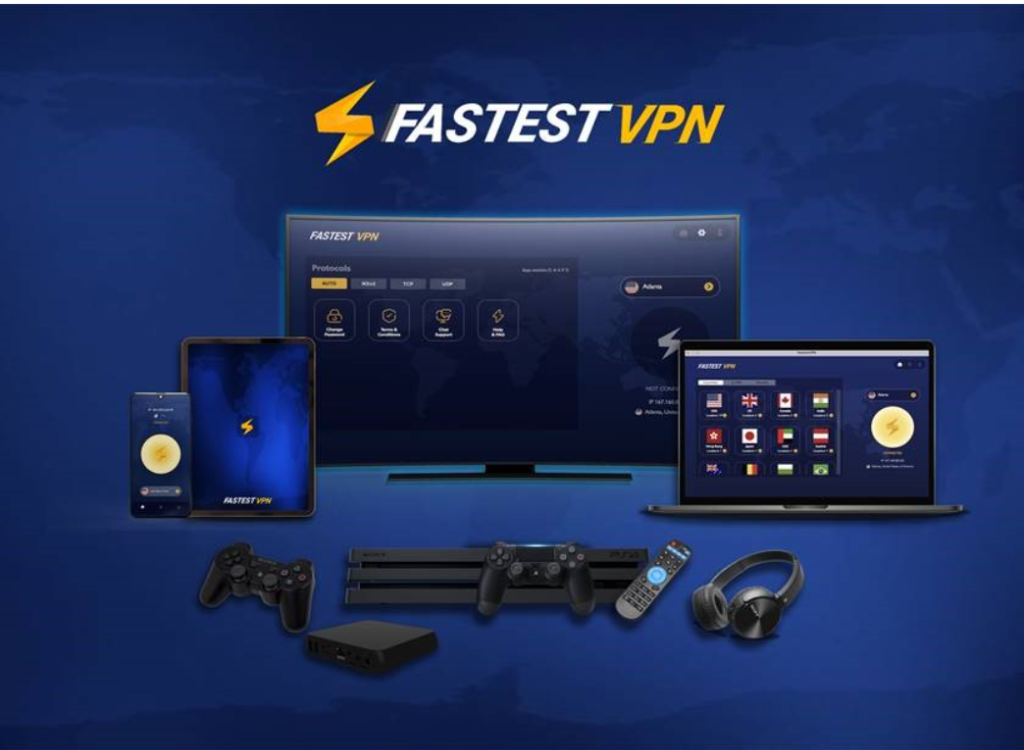
Detailed Technical Analysis
1. Cryptographic Protocol Foundations
A VPN provider's choice of protocol dictates connection setup latency, packet processing overhead, and cryptographic strength:
- NordVPN (NordLynx): Built directly on top of the WireGuard codebase, NordLynx resolves WireGuard's static IP storage limitation. Using a custom double NAT (Network Address Translation) system, it dynamically maps tunnel sessions to dynamic local IPs on the fly. This retains WireGuard's kernel-level performance (ChaCha20-Poly1305 cryptography) without storing user metadata on disk.
- Surfshark: Implements standard, high-performance WireGuard alongside legacy OpenVPN and IKEv2 protocols, providing raw speed and excellent compatibility across older client configurations.
- IPVanish: Employs a robust WireGuard architecture by default, delivering superior throughput and connection stability. Additionally, IPVanish supports OpenVPN with its proprietary Scramble obfuscation mode, which mutates VPN packet signatures on the fly. This transforms raw OpenVPN data into traffic that appears identical to standard HTTPS web traffic, bypassing Deep Packet Inspection (DPI) in restrictive firewalls.
- FastestVPN: Employs default high-speed WireGuard tunnels alongside OpenVPN and IKEv2. It provides 10Gbps connectivity limits, low-latency transport routing, and a clean configuration stack across all major client endpoints.
2. Server Security and Infrastructure Topologies
Standard servers write operating system logs, diagnostic tables, and cryptographic session keys to physical hard drives. In the event of physical server seizure or datacenter intrusion, this stored data poses a security threat.
To mitigate this, **NordVPN** and **Surfshark** operate entire server networks running on **RAM-only (diskless) configurations**. The operating system and VPN application stacks are loaded directly from secure, read-only central repositories during boot. Since volatile RAM requires constant power to retain data, a system reboot completely wipes all runtime cryptographic keys, routing registers, and temporary metadata.
**IPVanish** takes a different structural approach: rather than renting server space from third-party hosting partners, it owns and operates its own Tier-1 bare-metal server network and physical fiber connections. This direct control eliminates middleman colocation hosting companies, preventing unauthorized physical access and hypervisor monitoring.
**FastestVPN** routes user traffic through a newly upgraded physical server network featuring 10Gbps connections. While they enforce a strict zero-logs policy, they have not yet fully transitioned to diskless, volatile RAM-only physical server topologies.
3. Device Limits and Network-Level Routing Rules
Simultaneous connection limits dictate how many endpoints can route traffic through the provider's gateways concurrently. **Surfshark** and **IPVanish** offer unlimited simultaneous connections per account, which makes them ideal for securing complex network perimeters, local virtual machines, and multiple hardware devices.
**NordVPN** (10 devices) and **FastestVPN** (10 devices) enforce concurrency limits that easily cover standard household devices or developer workstation setups.
4. High-Performance Smart DNS and Streaming Extensions
Traditional VPN tunnels encrypt packets and encapsulate them in UDP or TCP headers. While highly secure, encryption overhead can reduce throughput and is unsupported on systems lacking native VPN client compatibility (such as Smart TVs, gaming consoles, and specific embedded network controllers).
To address this, all four providers support **Smart DNS**. Smart DNS intercepts and proxies only the location-verifying DNS queries to geo-specific servers, while routing the actual media streams directly at full ISP speed without encryption overhead.
FastestVPN supports standard Smart DNS routing, allowing users to bypass geographic restrictions on devices without native VPN application compatibility (such as gaming consoles and smart TVs).
🛡️ Get Comprehensive Digital Security with NordVPN

🔒 Stream Sports Securely with Unlimited Devices (Save 83%)
🚀 Secure 10 Devices with FastestVPN Lifetime Value (Save 93%)